Did You Spot the Animals?


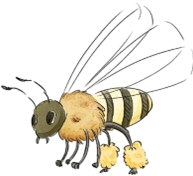


Hidden within our picture books are lots of animals that are currently on the UK’s Red, Amber and Green lists.
Future generations must fall in love with nature before it’s lost forever.
The UK is rapidly losing too many native species, most of which need woodlands to thrive.
Their decline is due to habitat loss and climate change.
Green List Animals
These are some of the most common animals found in the UK.
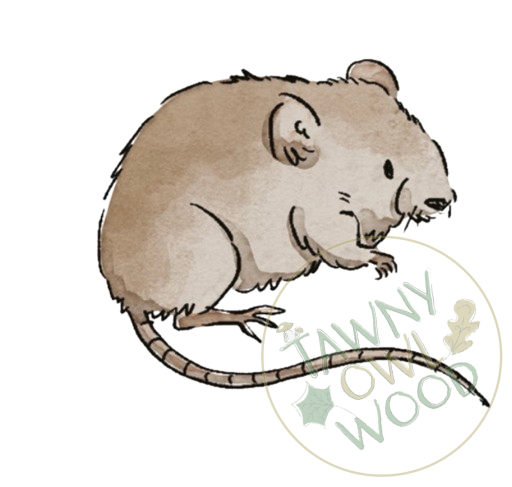
Bank Vole
Scientific Name: Clethrionomys glareolus (sometimes listed as Myodes glareolus)
Family: Cricetidae (voles, lemmings, hamsters)
Length: 9–12 cm (plus a 3–5 cm tail)
Weight: 15–40 g
Lifespan: 4–18 months (rarely up to 2 years)
Status: Widespread and common across the UK
Physical Appearance
- Fur: Rich reddish-brown back with lighter greyish underparts
- Tail: Relatively short, about half the body length
- Ears: Small, rounded, but slightly larger than a field vole’s
- Face: Blunt nose, small eyes, and whiskers
Habitat & Distribution
Habitat & Distribution
- UK Distribution: Common throughout mainland Britain, absent only from some islands (e.g. Ireland, where the species is not native)
- Preferred habitat:
- Woodlands, hedgerows, and scrubland
- Gardens and parks with good ground cover
- Bank voles particularly like areas with dense vegetation and fallen logs for shelter
Diet (Omnivorous)
- Plant-based foods: Leaves, fruits, nuts, seeds, buds, grasses, and roots
- Animal foods: Insects, larvae, and occasionally small snails
- Special favourite: Hazelnuts — they gnaw a neat round hole in the shell to eat the kernel inside (unlike wood mice, which leave rough-edged holes)
Behaviour
- Activity: Active both day and night, but most lively at dawn and dusk
- Movements: Create runways (small tracks) through vegetation, linking feeding and nesting sites
- Social structure: Territorial — individuals maintain small ranges but can overlap
- Winter: Do not hibernate; stay active year-round, feeding on stored food when possible
Breeding & Reproduction
- Breeding season: March to October
- Litters: Up to 4–5 per year, with 3–7 young per litter
- Gestation: 18–23 days
- Development: Young are weaned after 3 weeks and become sexually mature in just a few months
- Population booms: Can increase rapidly in good years, supporting predators like owls, stoats, and foxes
Conservation Status
- Conservation status: Least Concern — very common across the UK and Europe
- Main threats: Predation and harsh winters, but populations are usually stable
- Important prey species that help sustain many predators in woodland food chains
Interesting Facts
- They are excellent climbers, often seen foraging in low bushes or brambles.
- Bank voles are sometimes called the “red vole” because of their reddish-brown fur.
- Their neat hazelnut holes are a good way to identify their presence in the woods.
- Though small, they are very bold and often dart across woodland paths in daylight.
- They play a key role in forest regeneration by spreading seeds and nuts.
Predators
- Birds of prey: owls, kestrels, buzzards
- Mammals: foxes, stoats, weasels, cats
- Snakes: adders and grass snakes
Great Spotted Woodpecker
Scientific Name: Dendrocopos major
Family: Picidae (woodpecker family)
Size: About 20–24 cm (7.9–9.4 in) in length
Wingspan: 34–39 cm (13–15 in)
Weight: 70–100 grams (2.5–3.5 oz)
Lifespan: Typically 5–10 years
Physical Appearance
- Plumage: Black and white feathers, with white shoulder patches and a distinctive red patch under the tail
- Males vs. Females: Males have a red patch on the nape (back of head), while females do not
- Juveniles: Have a red cap on their heads, which disappears as they mature
Habitat & Distribution
- Range: Found across Europe, Asia, and parts of North Africa
- Habitat: Prefers woodlands, parks, and gardens, especially areas with mature trees
- Nesting: Nest in tree cavities, which they excavate themselves. Currently there are 140,000 breeding birds in the UK.
Diet (Omnivorous)
- Primary Food: Insects (especially larvae), beetles, spiders
- Other Foods: Seeds, nuts, tree sap, and occasionally bird eggs
- Feeding Behaviour: Uses its strong beak to drill into tree bark and extract food
Behaviour
- Drumming: Rapid tapping on trees to mark territory and attract mates. They beat their beaks against hollow branches or tree trucks at a stunning 40 hits per second!
- Communication: Both male and Female uses drumming and sharp calls to communicate
- Territoriality: Highly territorial, especially during the breeding season
Breeding & Reproduction
- Mating Season: April to June but can be found January to December
- Eggs: 4–7 white eggs per clutch
- Incubation Period: About 10–12 days
- Fledging: Young leave the nest after about 3–4 weeks
Conservation Status
- IUCN Status: Least Concern
- Threats: Habitat loss, competition for nesting sites, and climate change
- Population Trends: Increasing in many areas due to adaptability to urban environments
- Classified in the UK as Green under the Birds of Conservation Concern 5: the Red List for Birds (2021).
Interesting Facts
- Their tongue can extend up to 4 cm (1.5 in) beyond their beak to extract insects from tree bark.
- They play an important role in forest ecosystems by controlling insect populations and creating nesting cavities used by other species.
Nuthatch
Scientific Name: Sitta europaea
Family: Sittidae
Size: About 14 cm in length
Wingspan: 22–27 cm
Weight: 20–25 grams
Lifespan: Around 2–3 years, but some live up to 10 years
Physical Characteristics
- Colour:
◦ Upper body: Blue-grey
◦ Underparts: Buff-orange
◦ Face: White with a black eye-stripe, giving it a masked look - Beak: Sharp, pointed, and strong for hammering open nuts
- Legs: Short and powerful with sharp claws for gripping tree bark
Habitat & Distribution
- UK Distribution:
◦ Common in England and Wales
◦ Scarce in Scotland and absent from Ireland - Preferred Habitat:
◦ Mature woodlands, especially oak and beech forests
◦ Also found in parks and gardens with large trees
Behaviour & Lifestyle
- Drumming: Rapid tapping on trees to mark territory and attract mates. They beat their beaks against hollow branches or tree trucks at a stunning 40 hits per second!
- Communication: Both male and Female uses drumming and sharp calls to communicate
- Territoriality: Highly territorial, especially during the breeding season
Diet (Omnivorous)
- Main Foods:
◦ Insects, spiders, caterpillars (spring/summer)
◦ Seeds, nuts, and acorns (autumn/winter) - Foraging Strategy:
◦ Uses its strong beak to hammer open nuts and seeds
◦ Often stores food in tree bark cracks for later
Reproduction & Life Cycle
- Mating Season: Begins in March
- Nesting:
◦ Prefers tree holes or old woodpecker nests
◦ Uses mud to narrow the entrance, keeping predators out - Eggs:
◦ 6–8 white eggs with reddish spots
◦ Incubated by the female for 14–16 days - Chicks:
◦ Fledge at 23–25 days old
◦ Fed by both parents until they can forage on their own
Threats & Conservation Status
- UK Conservation Status: Green List (Least Concern)
- Main Threats:
◦ Loss of ancient woodlands
◦ Competition for nesting sites with woodpeckers and starlings
◦ Harsh winters affecting food availability
Conservation Efforts
- Woodland Management: Protecting old trees for nesting
- Nesting Boxes: Specially designed nuthatch boxes with small entrances
- Food Supply: Leaving seeds and nuts in bird feeders during winter
Interesting Facts
- Only UK bird that can climb down trees headfirst!
- Uses mud like cement to shrink nest hole entrances.
- Very loud and chatty! Known for its whistling call and drumming sounds.
- Often seen hammering nuts like a tiny woodpecker.
- Highly territorial, even in winter, chasing away larger birds from food sources

Bees
Scientific Name: Apis mellifera (Western honeybee)
Native Status: Not truly native (originally from Europe, Africa, and Asia), but widely established and managed in the UK.
Population: Mostly found in managed hives; very few truly wild colonies remain.
Habitat: Gardens, woodlands, meadows, and urban areas.
Role: Essential for pollinating wildflowers and food crops, contributing significantly to UK agriculture.
Physical Characteristics
- Size: 12–15 mm long
- Colour: Golden-brown with black stripes
- Wingspan: About 25 mm
- Body Features:
- Head: Large compound eyes, two antennae, strong mandibles
- Thorax: Contains powerful flight muscles
- Abdomen: Houses the stinger (females only)
Lifecycle & Roles in the Hive
- Queen Be
The only fertile female in the colony.
Lives up to 5 years.
Lays up to 2,000 eggs per day during peak season.
Secretes pheromones to regulate hive behaviour. - Worker Bees (Sterile females)
Perform all hive duties:
– Nursing larvae
– Foraging for nectar and pollen
– Cleaning and defending the hive
Lifespan:
Summer workers: 5–6 weeks
Winter workers: Several months - Drones (Males)
Their sole purpose is to mate with a queen.
Have no stinger.
Die after mating or are expelled from the hive in autumn.
Diet & Honey Production
- Primary Food: Nectar and pollen from flowers.
- Honey Production:
- Nectar is collected and stored in wax honeycombs.
- Worker bees use enzymes to break down nectar into simple sugars.
- Water is evaporated from the nectar to create honey, which is stored as a food source.
Pollination & Importance in the UK
- Crops Pollinated:
- Honeybees are mostly kept in managed hives and are likely responsible for pollinating between 5-15% of the UK’s insect-pollinated crops. Such as Apples, pears, strawberries, raspberries, oilseed rape, clover, and beans. That leaves 85-95% of the UK’s insect-pollinated crops relying on wild pollinators.
- Many species of bee, wasp, moth, butterfly, hoverfly, fly and beetle provide an essential service in the UK (and globally) pollinating £690 million worth of crops annually.
- Wildflower Pollination:
- Supports biodiversity by fertilising native plants. They are also vital for the survival of other wild plants that support so much of the UK wildlife.
Threats to UK Honeybees
Three bumblebee species have become extinct in recent decades. The recent European Red List for Bees reports that almost one in ten species of wild bee face extinction, and over the past 50 years, half the bee, butterfly and moth species studied in the 2013 State of Nature Report have declined. This is due to:
- Habitat Loss
- Urbanisation and intensive farming reduce flower-rich areas.
- Pesticides & Chemicals
- Neonicotinoids (now banned in the UK except for emergency use) harm bees’ nervous systems.
- Climate Change
- Alters flower blooming times, affecting food availability.
- Causes extreme weather events that disrupt colonies.
- Pests & Diseases
- Varroa destructor (Varroa mite): A deadly parasite that weakens bees and spreads viruses.
- Nosema: A fungal disease affecting digestion.
- American Foulbrood & European Foulbrood: Bacterial infections that devastate colonies.
- Colony Collapse Disorder (CCD)
- Although rare in the UK, colonies sometimes collapse due to a combination of stress factors.
- Habitat Loss
Conservation Efforts in the UK
- Bans on Harmful Pesticides:
- The UK has restricted neonicotinoids, which are highly toxic to bees.
- Government & NGO Initiatives:
- The National Pollinator Strategy encourages habitat creation.
- Organizations like The British Beekeepers Association (BBKA) support bee health.
- Wildflower Planting:
- Farmers and local councils create bee-friendly wildflower meadows.
- Sustainable Beekeeping:
- The UK has around 44,000 beekeepers, most of whom are hobbyists.
- Ethical hive management ensures colony health.
Interesting Facts
- A single honeybee visits up to 1,500 flowers per day.
- Bees must fly 55,000 miles to produce one pound of honey.
- UK honeybees communicate using the waggle dance to show others where to find food.
- Honey has antibacterial properties and was used in WWI to treat wounds.
- Each hive can produce 30–40 lbs of honey per year, depending on conditions.
The Uk Honey is not currently placed on the red list, however, there are several bumblebee species (6) in the UK that are on the Red List due to population declines caused by habitat loss, climate change, and pesticide use.
Visit the Wildlife Trusts website or Woodland Trusts to find out more
Or visit The British BeeKeepers Association for more information.
Beavers
Scientific Name: Castor canadensis (North American Beaver) & Castor fiber (Eurasian Beaver)
Family: Castoridae
Size: Length: 80–120 cm (including the tail), Tail: 25–30 cm (flattened and paddle-shaped), Height: About 30 cm at the shoulder.
Weight: 16–30 kg
Lifespan: 0–15 years in the wild, though they can live up to 24 years in captivity
Physical Characteristics
- Fur:
- Thick, water-resistant brown fur
- Dense undercoat for insulation
- Tail:
- Flat, leathery tail that acts like a rudder in the water and a tool for communication (slapping on water)
- Teeth:
- Orange incisors that grow constantly and need to be worn down by gnawing
- Webbed Feet: Adapted for swimming
- Eyes and Ears: Positioned higher on the head to allow them to see and hear above water while remaining mostly submerged
Habitat & Distribution
- Native Range:
- North America: Castor canadensis is found throughout North America
- Europe and Asia: Castor fiber is found across parts of Europe, Russia, and parts of Asia
- Preferred Habitat:
- Freshwater rivers, streams, lakes, and wetlands
- Forests near water
- Beaver ponds created by their dam-building
Behaviour & Lifestyle
- Semi-Aquatic: Spend much of their time in water but build dens and lodges on land
- Nocturnal: Beavers are typically most active during dusk and night
- Social Structure:
- Live in family groups, usually consisting of parents, last year’s offspring, and younger kits
- Each family maintains a territory defended against other beavers
- Communication:
- Tail slapping on water as a warning signal
- Wood gnawing sounds to communicate with others
Diet (Herbivorous)
- Main Foods:
- Tree bark, leaves, roots, and aquatic plants
- Favourite trees: Willows, aspens, birches, and poplars
- In the winter, they feed on woody plants stored underwater
- Foraging Behaviour:
- Use their sharp teeth to gnaw down trees to build dams and lodges
- Cut branches and store them near the water for winter feeding
Building Skills
- Dams:
- Beavers are known for their remarkable ability to build dams using branches, mud, and stones.
- The purpose of a dam is to raise water levels so they can access food during winter, create a safe environment for their lodge, and protect themselves from predators
- Lodges:
- Built from branches and mud, the lodge is an entrance submerged under water, providing safety from land predators
- Multiple chambers are created inside for nesting, living, and storing food
- Canals:
- Beavers often dig canals to transport logs and access new food sources
Reproduction & Life Cycle
- Mating Season: December to February
- Gestation: About 105–107 days
- Kits:
- Usually 2–4 kits per litter
- Born fully furred, with their eyes open and able to swim almost immediately
- Parental Care:
- Both parents help care for the kits
- Kits stay with the family until they are 2 years old, learning to build their own lodges
Threats & Conservation Status
- Conservation Status:
- Least Concern globally, though they were nearly wiped out in the 19th and early 20th centuries due to hunting for fur and habitat loss
- Main Threats:
- Habitat loss due to land development, river drainage, and deforestation
- Conflicts with human activities (flooding of roads, farmland, and forests by dams)
- Positive Impact:
- Beavers are considered a keystone species, meaning they greatly influence the environment around them by creating wetlands, improving water quality, and providing habitat for other species
Legal Protection in the UK
- Reintroduction Efforts:
- Beavers were reintroduced to the UK starting in the early 2000s (primarily in Scotland and Wales) after being hunted to extinction around 400 years ago
- Protected species in the UK, with active monitoring of reintroduced populations
Interesting Facts
- Eco-engineers: Beavers’ dams can help reduce flooding, increase biodiversity, and improve water quality by trapping sediments and filtering pollutants.
- Amazing Builders: A beaver can build a dam up to 1,200 feet long in some cases!
- Incredible Memory: Beavers can remember where they have stored food, even in winter!
- Beaver Lodges Are Cozy: The lodge’s temperature can stay around 0°C in winter, much warmer than the outside temperature.
- Tail Slap Warning: When threatened, beavers make a loud tail slap to alert others of danger.
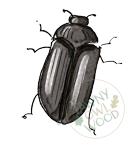
Cobweb Beetle
Scientific Name: Ctesias serra
Family: Dermestidae (the carpet beetle family)
Size: Length: 3–5 mm long (very tiny!)
Physical Characteristics
- Shape: Oval, compact body with short legs
- Colour: Dark brown to black, often covered with fine hairs that give them a dusty look
Habitat & Distribution
Where found:
- Across much of Europe, including the UK
- Often found in old buildings, barns, outhouses, or sheds
- Preferred habitat:
- Places with cobwebs, dust, or animal remains
- Also found in bird nests or old wasp nests
- Secretive: Usually live in dark, hidden corners, making them easy to miss
Behaviour & Lifestyle
- Slow-moving and often remain hidden in crevices
- Do not spin webs — they just live in spider webs, feeding on leftovers
- Can survive in very dusty, neglected corners of buildings where other food is scarce
Diet (Scavengers)
- Main food sources:
- Dead insects caught in spider webs
- Feathers, fur, and other animal remains
- Dried organic debris
- Ecological role:
- Act as nature’s recyclers, cleaning up waste and returning nutrients to the ecosystem
Reproduction & Life Cycle
- Eggs: Laid in sheltered spots with plenty of food
- Larvae:
- Fuzzy, hairy little grubs that also eat organic remains
- Can survive long periods with little food
- Adults: Emerge after pupation and continue scavenging
- Life span: A few months to a year, depending on conditions
Threats & Conservation Status
- Not endangered — they are relatively widespread but often overlooked
- Because they thrive in old, undisturbed places, they can be less common in modern, well-cleaned homes and buildings
- In some cases, they can be considered a minor pest in natural history collections or stored animal materials (since they eat feathers, fur, etc.)
Interesting Facts
- They’re called “cobweb beetles” because they live in spider webs, not because they make them.
- They are part of the Dermestid beetle group, which includes species used in museums to clean skeletons of flesh!
- Tiny recyclers: Their whole life revolves around cleaning up what’s left behind in nature.
- You’ve probably been near one without even realising it — they’re so small and shy!
Red List Animals
These are some of the most endangered animals in the UK which are close to extinction, if we don’t do anything to protect them.
Since we put this page together some of the animals listed within our books has sadly been moved from the Green List to the Red List. Making Nature Conservation even more crucial for children to learn about.
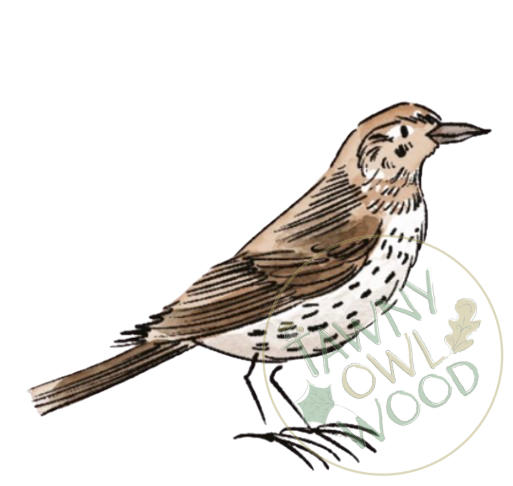
Song Thrush
Scientific Name: Turdus philomelos
Family: Turdidae (thrush family, includes blackbirds and mistle thrushes)
Size: 20–23 cm
Wingspan: 33–36 cm
Weight: 60–100 g
Lifespan: Typically 3–4 years, though some live over 10 years
Physical Characteristics
- Plumage:
- Warm brown back
- Cream or buff underparts covered in dark arrowhead spots
- Beak: Sharp and slender, suited for invertebrates and fruit
- Distinctive trait: Spotted chest helps tell them apart from blackbirds
Habitat & Distribution
- UK Distribution: Widespread, but numbers have fallen sharply
- Common in gardens, parks, hedgerows, woodlands, and farmland
- Migration:
- Most are resident year-round in the UK
- Northern European thrushes migrate south to Britain in winter
Behaviour & Lifestyle
- Song:
- Rich, melodious, and repetitive — each phrase is sung 2–4 times before moving to the next
- Sings from treetops or rooftops, often heard in gardens at dawn and dusk
- Territorial: Males sing strongly to defend their patch
- Social: Usually solitary or in pairs, but may join flocks in winter when feeding on berries
Diet (Omnivorous)
- Spring/Summer: Earthworms, snails, insects, caterpillars, slugs
- Autumn/Winter: Berries and fruit (rowan, holly, ivy, hawthorn, yew)
- Special behaviour:
- Famous for breaking snail shells on a “anvil stone” to get the soft body inside
Reproduction & Life Cycle
- Breeding season: March–August
- Nest: Built in shrubs or hedges, made of grass and mud, lined with soft material
- Clutch size: 3–5 bright blue eggs with black spots
- Incubation: 12–14 days (by the female)
- Fledging: Chicks leave the nest after 12–15 days
- Broods: Often raise 2–3 broods per year if conditions are good
Threats & Conservation Status
- Red List species in the UK (serious concern)
- Reasons for decline:
- Loss of hedgerows and mixed farmland
- Fewer damp grasslands (fewer earthworms and snails)
- Pesticide use reducing insect food
- Nest predation in fragmented habitats
Conservation Efforts
- Agri-environment schemes encouraging wildlife-friendly farming
- Garden efforts (providing berry plants and avoiding slug pellets that poison thrushes indirectly)
- Habitat management to restore mixed woodlands and hedgerows
Interesting Facts
- Known as “nature’s repetitive singer” — unlike blackbirds, they repeat musical phrases several times.
- Can smash open tough snail shells with a favourite stone “anvil.”
- Important seed dispersers — their droppings help spread berry plants like holly and ivy.
- Featured in poetry and literature, including works by Thomas Hardy.
- Can sing up to 100 different song phrases.
Nightingale
Scientific Name: Luscinia megarhynchos
Family: Muscicapidae (Old World flycatchers and chats)
Size: 15–16.5 cm
Wingspan: 23–26 cm
Weight: 20–24 g
- Lifespan: Around 2 years on average, though some live up to 5 years
- Status in UK: Now scarce, with a declining population concentrated in southeast and central England
Physical Characteristics
- Plumage:
- Overall plain brown upperparts and pale underparts
- Reddish-brown tail, which often gives it away when it flicks
- Beak: Fine and pointed, suited for insect catching
- Appearance: Rather plain—most famous for its extraordinary song rather than its looks
Habitat & Distribution
- UK distribution: Mainly in southeast and central England, particularly Essex, Kent, Sussex, Suffolk, and Norfolk
- Absent from Scotland, Wales, Northern Ireland, and most of western/northern England
- Preferred habitat:
- Dense scrub, coppiced woodland, and thick hedgerows
- Needs tangled vegetation like hawthorn, bramble, and hazel for cover
- Migration:
- Summer visitor — arrives in April and leaves by August/September
- Winters in sub-Saharan Africa
Behaviour & Lifestyle
- Song:
- The nightingale is world-famous for its rich, powerful, and varied song
- Males sing at both day and night (hence the name), especially during breeding season
- The song includes whistles, trills, gurgles, and fluty notes
- Territorial: Males sing to defend their patch and attract mates
- Secretive: Although loud, they are hard to spot because they stay hidden in dense vegetation
Diet (Insectivorous)
- Main foods: Insects, spiders, beetles, ants, caterpillars, and earthworms
- Seasonal foods: In late summer, they also eat berries to fatten up before migration
Reproduction & Life Cycle
- Breeding season: May to July
- Nests: Built low in thick vegetation, made of leaves and grass
- Clutch size: 4–5 olive-brown eggs
- Incubation: About 13–14 days
- Fledging: Young leave the nest after around 11 days
- Parental care: Both parents feed the chicks
Threats & Conservation Status
- UK Conservation Status: Red List (highest concern)
- Population decline: Over 90% decline in the last 50 years
- Main threats:
- Loss of coppiced woodland and dense scrub (their ideal habitat)
- Changes in woodland management
- Predation (especially by deer browsing, removing undergrowth)
- Climate change affecting migration and food supply
Conservation Efforts
- Habitat management projects: RSPB reserves like Pulborough Brooks (West Sussex) and Lakenheath Fen (Suffolk) manage habitats to help nightingales
- Awareness campaigns: Efforts to highlight their cultural importance as one of Britain’s most iconic songbirds
Interesting Facts
- Their song can be heard up to half a mile away!
- Nightingales sing at night because there is less competition from other birds, making their song travel further.
- They have inspired poets, musicians, and writers for centuries, from John Keats to folk songs.
- A single male can have over 200 different phrases in its song.
- Despite their fame, they are surprisingly plain-looking, proving that beauty isn’t just about appearance.
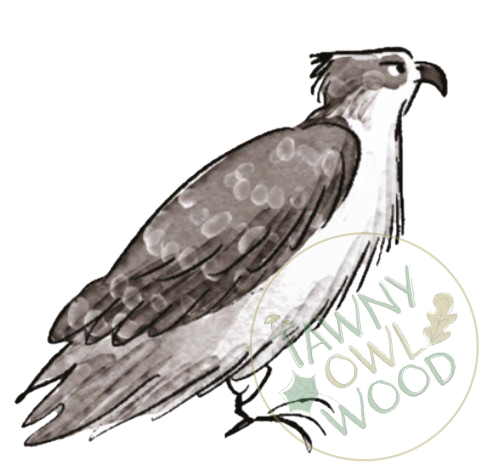
Osprey
Scientific Name: Pandion haliaetus
Family: Pandionidae (the only member – unique among raptors)
Size: 55–60 cm
Wingspan: 145–170 cm
Weight: 1.2–2 kg
Lifespan: Typically 8–10 years, but some live over 20
UK Conservation Status: Green List (recovering, but still rare)
Physical Characteristics
- Plumage:
- Dark brown upperparts
- White underparts and head, with a bold dark eye-stripe
- Wings: Long, angled (often bent in a shallow “M” shape in flight)
- Eyes: Yellow, adapted for spotting fish underwater
- Distinctive feature: Reversible outer toe — allows them to grip fish with two toes forward and two back, like owls
Habitat & Distribution
- UK Distribution:
- Historically bred widely, but wiped out in the UK by the early 20th century due to persecution and egg collection
- Naturally recolonised Scotland in the 1950s (Loch Garten, Cairngorms)
- Reintroduction projects have spread them to:
- Rutland Water (Midlands)
- Poole Harbour (Dorset) (new colony building)
- Still very rare breeders: only around 300 breeding pairs in the UK
- Widespread passage migrant seen at lakes, reservoirs, and coasts in spring and autumn
- Prefer large lakes, reservoirs, rivers, and estuaries with healthy fish populations
- Nest in tall trees, cliffs, or increasingly on artificial nest platforms provided by conservationists
Behaviour & Lifestyle
- Song:
- Rich, melodious, and repetitive — each phrase is sung 2–4 times before moving to the next
- Sings from treetops or rooftops, often heard in gardens at dawn and dusk
- Territorial: Males sing strongly to defend their patch
- Social: Usually solitary or in pairs, but may join flocks in winter when feeding on berries
Diet
- Almost entirely fish — 99% of diet
- Catches trout, pike, perch, mullet, and flounder, depending on habitat
- Hunts by hovering over water then diving feet-first to snatch fish with sharp talons
- Shakes off water in mid-air after catching prey
Reproduction & Life Cycle
- Breeding season: March–August
- Nest: Built in shrubs or hedges, made of grass and mud, lined with soft material
- Clutch size: 3–5 bright blue eggs with black spots
- Incubation: 12–14 days (by the female)
- Fledging: Chicks leave the nest after 12–15 days
- Broods: Often raise 2–3 broods per year if conditions are good
Threats & Conservation Status
- Red List species in the UK (serious concern)
- Reasons for decline:
- Loss of hedgerows and mixed farmland
- Fewer damp grasslands (fewer earthworms and snails)
- Pesticide use reducing insect food
- Nest predation in fragmented habitats
Conservation Efforts
- Agri-environment schemes encouraging wildlife-friendly farming
- Garden efforts (providing berry plants and avoiding slug pellets that poison thrushes indirectly)
- Habitat management to restore mixed woodlands and hedgerows
Interesting Facts
- Known as “nature’s repetitive singer” — unlike blackbirds, they repeat musical phrases several times.
- Can smash open tough snail shells with a favourite stone “anvil.”
- Important seed dispersers — their droppings help spread berry plants like holly and ivy.
- Featured in poetry and literature, including works by Thomas Hardy.
- Can sing up to 100 different song phrases.
Hazel Dormouse
Scientific Name: Muscardinus avellanarius
Family: Gliridae (Dormouse family)
Size:
Body Length: 6–9 cm
Tail Length: 5.5–7.5 cm
Weight: 70–100 grams (2.5–3.5 oz)
Lifespan: Up to 5 years in the wild
Physical Characteristics
- Fur: Golden-brown and soft
- Tail: Long and fluffy, unlike the scaly tails of mice
- Eyes: Large, black, and round (adapted for nocturnal vision)
- Ears: Small and rounded, often hidden in fur
- Whiskers: Long and sensitive, helping with navigation
Habitat & Distribution
- Native to: The UK and much of Europe
- UK Distribution:
- Found mainly in southern England and Wales
- Rare or absent in Scotland, Northern England, and Northern Ireland
- Preferred Habitat:
- Woodland edges, hedgerows, and scrubland
- Hazel-rich woodlands (where their name comes from)
- Overgrown hedgerows and dense undergrowth
Behaviour & Lifestyle
- Nocturnal: Active at night, spending most of their time in trees and shrubs
- Arboreal: Skilled climbers, rarely descending to the ground
- Hibernation:
- Hibernate from October to April/May in nests near the ground
- Enter torpor (deep sleep) in cold or food-scarce periods
- Social Behaviour: Generally solitary, except during mating season
Diet
- Spring & Summer:
- Tree flowers (oak, hawthorn, willow)
- Insects (aphids, caterpillars)
- Autumn:
- Hazelnuts (their favourite food!)
- Berries (bramble, honeysuckle)
- Seeds
- Winter:
- They do not eat—hibernate instead
Reproduction
- Mating Season: May to September
- Gestation Period: About 23 days
- Litter Size: 2–7 pups
- Development:
- Born blind and hairless
- Weaned at about 4 weeks
- Fully independent in 2 months
- Reproduction Rate: Usually one litter per year, sometimes two in warm years
Conservation Status
- UK Red List: Vulnerable
- Threats:
- Habitat loss (deforestation, hedge removal, land development)
- Climate change (affects hibernation cycles)
- Fragmentation of woodlands (isolating populations)
- Predation (by birds of prey, weasels, and domestic cats)
- Legal Protection:
- Fully protected under UK law (Wildlife and Countryside Act 1981)
- Illegal to capture, harm, or disturb them
Conservation Efforts in the UK
- Habitat Restoration:
- Planting hedgerows and woodland corridors to connect fragmented habitats
- Encouraging traditional woodland management (coppicing)
- Reintroduction Programs:
- Conservation groups like the People’s Trust for Endangered Species (PTES) have reintroduced dormice to areas where they went extinct
- Hedgerow Protection:
- Farmers are encouraged to leave thick, overgrown hedgerows
Interesting Facts
- They can hibernate for over 6 months!
- Unlike common mice, dormice have fur-covered tails.
- Before hibernation, they double their weight by storing fat.
- They are excellent climbers but poor runners, preferring to stay in trees.
- They leave neatly gnawed holes in hazelnuts—this is a key sign of their presence!
Pine Martin
Scientific Name: Martes martes
Family: Mustelidae (same as weasels, otters, and badgers)
Size:
Body Length: 45–58 cm
Tail Length: 18–25 cm
Weight:
Males: 1.5–2.2 kg
Females: 0.9–1.5 kg
Lifespan: 8–10 years in the wild
Physical Characteristics
- Fur: Rich brown with a distinctive cream/yellow “bib” on the throat
- Tail: Long, bushy, and dark brown, used for balance in trees
- Face: Small, rounded ears with sharp facial features
- Paws: Sharp claws for climbing trees
Habitat & Distribution
- UK Distribution:
- Strongest populations in Scotland, especially the Highlands
- Small, recovering populations in Wales, Northern England, and Northern Ireland
- Almost extinct in most of England
- Preferred Habitat:
- Woodlands (especially native broadleaf forests)
- Rocky outcrops and scrubland
Behaviour & Lifestyle
- Nocturnal & Crepuscular: Most active at dusk and dawn
- Arboreal: Excellent climbers, but also hunt on the ground
- Territorial: Home ranges can be 5–25 km², marked with scent
- Solitary: Apart from the breeding season and mothers raising kits
Diet (Omnivorous)
- Small Mammals: Voles, mice, rabbits
- Birds & Eggs: Occasionally preys on ground-nesting birds
- Insects & Amphibians: Beetles, frogs
- Fruit & Berries: Especially in summer/autumn (rowan, bilberries)
- Carrion & Human Food: Opportunistic scavengers
Impact on Grey Squirrels
- Pine martens help control invasive grey squirrels.
- Grey squirrels are clumsier and spend more time on the ground, making them easier prey.
- Where pine martens are returning, red squirrels (Sciurus vulgaris) are making a comeback, as they are better adapted to avoid predation.
Reproduction & Life Cycle
- Mating Season: July–August
- Gestation: Delayed implantation (fertilised eggs don’t start developing immediately)
- Birth:
- Kits are born in March–April after a 9-month delay
- Litter Size: 2–5 kits
- Born blind and helpless, they stay in the den for 6–7 weeks
- Independence: Young martens leave their mother at 5–6 months old
Threats & Conservation Status
- UK Red List: Least Concern (globally), but Near Threatened in England & Wales
- Main Threats:
- Habitat loss (deforestation and land development)
- Persecution (historically hunted for fur, still occasionally targeted)
- Road accidents
- Competition from foxes in some areas
Legal Protection in the UK
- Fully protected under the Wildlife and Countryside Act 1981.
- Illegal to kill, trap, or disturb pine martens or their dens.
Conservation Efforts in the UK
- Scottish Populations: Stable and slowly expanding.
- England & Wales:
- Reintroduction projects (such as in Wales by the Vincent Wildlife Trust).
- Sightings increasing in Shropshire, Cumbria, and Northumberland.
- Habitat Restoration: Encouraging the planting of native woodlands.
Interesting Facts
- One of the rarest mammals in the UK (except in Scotland).
- They have semi-retractable claws for climbing.
- Unlike other mustelids, they prefer woodlands and are rarely found in open areas.
- They can leap several meters between trees when hunting.
- They help red squirrels by preying on invasive grey squirrels.
Bechstein’s Bat
Scientific Name: Myotis bechsteinii
Family: Vespertilionidae (Evening bats)
Size:
Body Length: 4.3–5.3 cm
Wingspan: 25–30 cm
Weight: 7–13 g (about the weight of a £1 coin)
Lifespan: Up to 21 years
Physical Characteristics
- Fur: Soft, reddish-brown on the back, pale underneath
- Ears: Large, broad, and long (almost as long as the head)
- Face: Pinkish with a short, broad muzzle
- Wings: Broad and short, adapted for slow, highly manoeuvrable flight
Habitat & Distribution
- UK Distribution:
- Extremely rare and found mainly in southern England and south Wales
- Strongholds in Wiltshire, Dorset, Sussex, and the New Forest
- Absent from Scotland and Northern Ireland
- Preferred Habitat:
- Ancient broadleaf woodlands (especially oak, beech, and hazel)
- Prefers dense, unmanaged forests with plenty of hollow trees
- Forages in woodland clearings, edges, and hedgerows
Behaviour & Lifestyle
- Nocturnal: Active at night, roosting in trees during the day
- Slow, agile flight: Hunts close to vegetation, flying slowly through dense woods
- Social Species: Lives in small colonies, often in tree hollows
- Roosting Preferences:
- Summer: Tree cavities, bat boxes, and old woodpecker holes
- Winter: Hibernates in caves, mines, and sometimes hollow trees
- Home Range: Small, usually within 1–2 km of their roost
Diet (Insectivorous)
- Main Prey:
- Moths, beetles, spiders, and other small woodland insects
- Catches prey in flight or by gleaning insects off leaves
- Foraging Behaviour:
- Hunts mainly within woodlands
- Uses echolocation to detect prey but also listens for movement
Reproduction & Life Cycle
- Mating Season: Autumn, with delayed fertilisation until spring
- Maternity colonies: Form in April and May: between 10 to 30 females gather together
- Gestation: About 6–8 weeks
- Birth:
- Pups born in June or July
- Usually one pup per year
- Development:
- Pups are weaned after 4–6 weeks
- Become independent by late summer but may stay in the colony
Legal Protection in the UK
- Fully protected under:
- Wildlife and Countryside Act 1981
- Conservation of Habitats and Species Regulations 2017
- Illegal to:
- Kill, capture, or disturb Bechstein’s bats
- Damage or destroy their roosting sites
Conservation Efforts in the UK
- Woodland Protection:
- Managing ancient woodlands to maintain roosting sites
- Encouraging landowners to leave old trees standing
- Bat Boxes & Roosting Sites:
- Installing special bat boxes in known habitats
- Protecting tree hollows and deadwood
- Monitoring & Research:
- Bat Conservation Trust (BCT) and other organizations track populations
- Use of acoustic surveys to detect bats in woodlands
Interesting Facts
- One of the UK’s rarest bats, with fewer than 1,500 recorded individuals!
- One of the most woodland-dependent bats in Europe.
- Very quiet echolocation, making them hard to detect with bat detectors.
- Their large ears help them hear prey moving in leaves.
- They rarely fly in open areas, preferring dense forest cover.
Blue Ground Beetle
Scientific Name: Carabus intricatus
Family: Carabidae (Ground beetles)
Size: 2.5–3.5 cm long
Lifespan: Estimated 2–3 years
Conservation Status: Rare and threatened in the UK
Physical Characteristics
- Colour: Metallic blue with a slightly iridescent sheen. Not to be mistaken with the Violet Ground Bettles, which are very common and can be found in gardens, woodlands and meadows.
- Body Shape:
- Long and flattened, allowing it to crawl into tight spaces
- Ridged wing cases (elytra), but cannot fly
- Legs: Long and strong for climbing tree trunks and rough terrain
- Antennae: Long and sensitive, used for detecting prey
Habitat & Distribution
- UK Distribution:
- Extremely rare, mainly found in Devon, Cornwall, and South Wales
- Prefers ancient oak woodlands with plenty of deadwood and moss
- Preferred Habitat:
- Moist, shaded deciduous woodlands
- Areas with old trees, mossy ground, and rotting logs
- Often found under bark, fallen logs, or in leaf litter
Behaviour & Lifestyle
- Nocturnal: Active at night, hunting in woodland undergrowth
- Terrestrial: Cannot fly, but excellent climber
- Secretive: Rarely seen due to its hidden lifestyle in deep woodlands
Diet (Carnivorous)
- Main Prey:
- Slugs (its primary food source!)
- Insects and small invertebrates
- Hunting Strategy:
- Uses powerful jaws (mandibles) to crush prey
- Climbs trees and hides under bark to find slugs
Reproduction & Life Cycle
- Mating Season: Spring to early summer
- Eggs: Laid in damp soil or leaf litter
- Larvae:
- Predatory, just like adults
- Live in the soil and pupate into adults
- Adult Beetles: Active from late spring to autumn
Threats & Conservation Status
- UK Red List: Endangered
- Main Threats:
- Deforestation & habitat loss (cutting down ancient woodlands)
- Fragmentation of woodlands (isolating populations)
- Pollution & pesticides (affecting its prey, especially slugs)
- Climate change (altering moist woodland habitats)
Legal Protection in the UK
- Protected under conservation laws
- Considered a priority species for woodland conservation
Conservation Efforts in the UK
- Woodland Protection: Preserving ancient oak woodlands
- Slug-friendly Conservation: Protecting ecosystems where natural slug populations thrive
- Species Monitoring: Surveys by conservation groups to track beetle populations
Interesting Facts
- Largest ground beetle species in the UK!
- Unlike most beetles, it cannot fly due to fused wing cases.
- Uses its sharp mandibles to crush slugs—making it a natural pest controller!
- Was thought to be extinct in the UK for over 100 years until it was rediscovered in 1994.
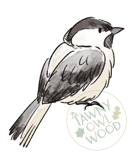
Willow Tit
Scientific Name: Poecile montanus (formerly Parus montanus)
Family: Paridae (tit family – includes blue tits, great tits, etc.)
- Size:
- Length: 11.5–12 cm
- Wingspan: 17–19 cm
- Weight: 9–12 g
- Lifespan: Typically 2–3 years, though some survive up to 5
- UK Conservation Status: Red List (severe decline)
Physical Characteristics
Very similar to the marsh tit, but a few key differences:
- Cap: Black, but duller and less glossy than the marsh tit’s
- Cheeks: White, with greyish flanks and back
- Bill: Often shows a pale spot on the upper mandible (hard to see)
- Voice: Distinctive harsh “dzerr dzerr” call (the best way to separate them from marsh tits)
Habitat & Distribution
- UK Distribution:
Very similar to the marsh tit, but a few key differences:
- Cap: Black, but duller and less glossy than the marsh tit’s
- Cheeks: White, with greyish flanks and back
- Bill: Often shows a pale spot on the upper mandible (hard to see)
- Voice: Distinctive harsh “dzerr dzerr” call (the best way to separate them from marsh tits)
- Preferred Habitat:
- Prefers damp scrubby woodland, wet woodland, and young woodland with willows and birch
- Often found in overgrown hedgerows, carr (wetland woodland), and scrubby edges
- Requires dead and decaying wood for nesting
Behaviour & Lifestyle
- Nesting:
- One of the only UK birds that excavates its own nest hole in rotting or decayed wood
- Nests lined with moss, feathers, and hair
- Social: Usually seen in pairs or small groups, but less bold than blue or great tits
- Territorial: Strongly defends nesting areas
- Activity: Quick, flitting movements, often low in scrubby growth rather than high in trees
Diet
- Main Prey:
- Slugs (its primary food source!)
- Insects and small invertebrates
- Hunting Strategy:
- Uses powerful jaws (mandibles) to crush prey
- Climbs trees and hides under bark to find slugs
Reproduction & Life Cycle
- Breeding season: April–June
- Clutch size: 6–9 white eggs with reddish spots
- Incubation: 13–15 days (by female)
- Fledging: Young leave the nest after 16–19 days
- Usually just one brood per year
Threats & Conservation Status
- UK Red List: Endangered
- Population crash: Around 90% decline since the 1970s
- Main threats:
- Loss of scrub and young woodland due to land management changes
- Reduction in deadwood (vital for nesting) through woodland tidying
- Competition with other tits for food
- Nest predation by great spotted woodpeckers
- Conservation efforts focus on creating scrubby, wet woodland and leaving rotting wood for nesting sites
Predators
- Nests vulnerable to woodpeckers, stoats, weasels, and squirrels
- Adults preyed on by sparrowhawks and owls
Interesting Facts
- The UK’s fastest-declining resident bird species.
- Sometimes called the “water tit” because of its love for damp woodlands.
- Unusually for tits, they dig out their own nest hole.
- Despite their name, they aren’t restricted to willow trees — but often found near them.
- Their harsh call is the easiest way to separate them from the lookalike marsh tit.
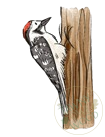
Lesser Spotted Woodpecker
Scientific Name: Dryobates minor (formerly Dendrocopos minor)
Family: Picidae (woodpeckers)
- Size:
- Length: 14–15 cm (about the size of a sparrow – UK’s smallest woodpecker)
- Wingspan: 25–27 cm
- Weight: 17–25 g
- Lifespan: 4–5 years on average, though some live longer
- UK Conservation Status: Red List (rapid decline)
Physical Characteristics
- Plumage:
- Black and white barred wings
- White underparts with streaking on the flanks
- Male: small red crown patch
- Female: black crown
- Beak: Short and fine compared to the Great Spotted Woodpecker
- Size comparison: Much smaller and more delicate than the Great Spotted Woodpecker
- Call: High-pitched “kee-kee-kee” notes, more subtle than other woodpeckers
- Drumming: Softer, faster, and shorter than Great Spotted Woodpecker’s drumming
Habitat & Distribution
- UK Distribution:
- Range: Widespread in England and Wales, rare in Scotland, absent from Ireland
- Strongholds: old broadleaf woodland in southern England, especially with oak, alder, and birch
- UK population estimated at just 2,000 breeding pairs, declining rapidly
- Preferred Habitat:
- Prefers deciduous and mixed woodland, especially with old trees and dead wood
- Also found in parks, orchards, and large gardens with mature trees
- Requires rotting or dead wood for nesting and feeding
Behaviour & Lifestyle
- Shy and elusive compared to other woodpeckers — often goes unnoticed despite drumming and calling
- Usually forages in canopy branches, not on trunks like larger woodpeckers
- Drumming mainly in late winter and early spring to defend territories
Diet
- Mostly insects and larvae, especially wood-boring beetle larvae found in decaying trees
- Also eats spiders and occasionally seeds in winter
- Forages by hopping along branches, often near the treetops
Reproduction & Life Cycle
- Breeding season: April–June
- Nest: Excavates a hole in rotting wood, often in dead branches of living trees
- Clutch size: 4–6 eggs
- Incubation: 10–12 days (both parents)
- Fledging: Young leave nest after about 20 days
- Both parents feed chicks
Threats & Conservation Status
- Red List species — serious concern in the UK
- Population decline causes:
- Loss of old woodland and traditional orchards
- Removal of deadwood (reduces nest sites and feeding opportunities)
- Increased competition with Great Spotted Woodpeckers
- Low breeding success in some areas
- Conservation work focuses on protecting ancient woodlands, orchards, and deadwood habitats
Predators
- Eggs and chicks vulnerable to stoats, squirrels, and larger birds (e.g., jays)
- Adults occasionally preyed upon by sparrowhawks
Interesting Facts
- The smallest woodpecker in the UK, about the size of a house sparrow.
- Unlike larger woodpeckers, they often forage in the treetops.
- Their rapid, weak drumming can sound like a sewing machine.
- Very secretive — often heard before they are seen.
- Their population decline is so steep they are now considered a priority species for conservation.
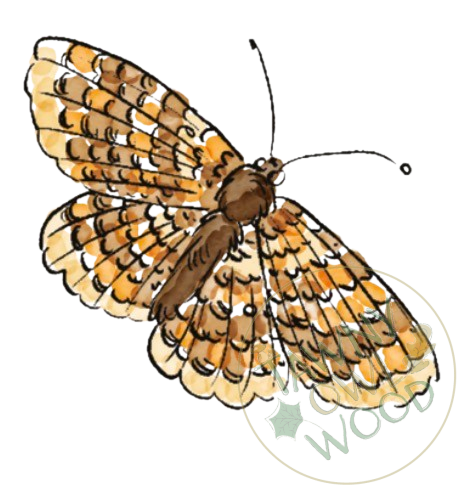
Heath Fritillary
Scientific Name: Melitaea athalia
Family: Nymphalidae (brush-footed butterflies))
Size: 39–47 mm
Lifespan: 2–3 weeks in flight season
Conservation Status: : Endangered — one of Britain’s rarest butterflies
Physical Characteristics
- Upperside: Bright orange and black checkerboard pattern, with black lines and spots across the wings
- Underside: Hindwings pale with orange and cream bands, plus a row of black dots
- Similar species: Can be confused with other fritillaries, but usually smaller and with more distinct checkerboard markings
Habitat & Distribution
- UK Distribution:
- Restricted to small colonies in southern England:
- Exmoor (Somerset and Devon)
- The Blean Woods (Kent)
- Parts of Cornwall and Devon
- Historically widespread, but declined severely in the 20th century
- Restricted to small colonies in southern England:
- Preferred Habitat:
- Found in warm, sheltered places with plenty of sunshine
- Prefers:
- Coppiced woodland clearings
- Heathland
- Flower-rich grassland edges
- Requires habitats managed traditionally (like coppicing) to keep open sunny areas with larval foodplants
Behaviour & Lifestyle
- Flight: Low and fluttery, often basking with wings open on sunny patches
- Colonies: Tend to stay localised — adults rarely travel far from breeding sites
- Activity: Most active in warm sunshine, settle quickly in cooler conditions
Diet
- Caterpillars feed mainly on:
- Common cow-wheat (Melampyrum pratense)
- Ribwort plantain (Plantago lanceolata)
- Germander speedwell (Veronica chamaedrys)
- Adults (nectar): Feed on bramble blossom, hawkbit, and other wildflowers
Reproduction & Life Cycle
- Flight season: May to July (single generation in the UK)
- Eggs: Laid in clusters on the underside of foodplant leaves
- Caterpillars: Black with spines, feed in groups initially
- Pupation: In leaf litter or low vegetation
- Overwintering: Caterpillars hibernate during winter, resuming feeding in spring
Threats & Conservation Status
- UK Red List: Endangered
- Main Threats:
- Deforestation & habitat loss (cutting down ancient woodlands)
- Fragmentation of woodlands (isolating populations)
- Pollution & pesticides (affecting its prey, especially slugs)
- Climate change (altering moist woodland habitats)
Predators
- Birds, spiders, and parasitic wasps
- Vulnerable at egg and caterpillar stages
Conservation Efforts in the UK
- UK status: Endangered, protected under the Wildlife and Countryside Act 1981
- Declines caused by:
- Loss of coppiced woodland
- Habitat fragmentation
- Changes in land use and farming
- Conservation efforts:
- Coppice woodland management has been reintroduced in some areas (especially in Kent’s Blean Woods)
- Careful habitat restoration and monitoring by Butterfly Conservation and local groups
Interesting Facts
- Sometimes nicknamed the “Woodman’s Follower”, because they thrived in woodland areas managed by traditional coppicing.
- They are one of Britain’s most localised butterflies — colonies may be limited to a single clearing.
- Their caterpillars feed in groups, making them easier to spot than solitary species.
- Conservation action has brought them back from the brink in places like Kent.
- Despite being so rare in the UK, they are widespread in mainland Europe.
Tawny Owl Wood does not claim all the information listed above as its own. A full list of sources used to gather all the information is listed below. To find out more information about the above animals listed please visit or contact the sources below: